
Pharmaceutical Air Freight: Temperature Control, Packaging & Compliance – Complete Guide for Businesses
Pharmaceutical air freight plays a critical role in transporting medicines, vaccines, medical samples and temperature-sensitive healthcare products across international markets. Unlike general cargo, pharmaceutical shipments require careful temperature management, specialised packaging, accurate documentation and coordinated handling throughout the transportation process.
For pharmaceutical manufacturers, exporters, importers and healthcare distributors, choosing the right logistics partner can help reduce transit risks, protect product quality and support timely deliveries.
CargoMate Logistics provides air freight solutions for pharmaceutical and healthcare shipments, with temperature-aware handling and coordinated cargo movement. Businesses can explore its air freight services in India to understand the available shipping options.
What Is Pharmaceutical Air Freight?
Pharmaceutical air freight refers to the transportation of medicines and healthcare products by aircraft under handling, packaging and environmental conditions appropriate to the shipment.
It is commonly used for products such as:
- Vaccines and temperature-sensitive medicines
- Pharmaceutical ingredients and medical supplies
- Biologics and specialised healthcare products
- Diagnostic kits and permitted medical samples
- Urgent pharmaceutical consignments for hospitals and distributors
Air transportation can reduce transit time compared with many ocean freight routes. However, faster transportation alone does not guarantee product safety. The shipment must remain within its specified storage and transportation conditions during airport handling, ground transportation, loading, transit and final delivery.
The World Health Organization (WHO) and the International Air Transport Association (IATA) provide guidance relevant to the safe transportation of time- and temperature-sensitive healthcare products.
Why Temperature Control Matters in Pharmaceutical Shipping
Many pharmaceutical products are sensitive to temperature fluctuations. Exposure to unsuitable conditions may affect their stability, quality or intended performance.
Different products have different storage requirements. Depending on the manufacturer’s specifications, a shipment may require controlled room temperature, refrigerated conditions, frozen transportation or another validated temperature range.
For example, certain vaccines and medicines require storage between +2°C and +8°C, while other pharmaceutical products require different conditions. This range should never be assumed for every medicine.
Temperature-controlled air freight helps businesses manage risks through appropriate packaging, qualified handling procedures and temperature monitoring.
Key benefits include:
- Product integrity: Helps maintain the conditions specified by the manufacturer.
- Faster transportation: Supports urgent deliveries to international markets.
- Reduced exposure risk: Limits unnecessary delays and uncontrolled handling.
- Better traceability: Temperature records and shipment documentation support quality investigations.
- Supply chain reliability: Helps coordinate deliveries between manufacturers, distributors and healthcare providers.
Pharmaceutical Air Freight Packaging: What Businesses Need to Know
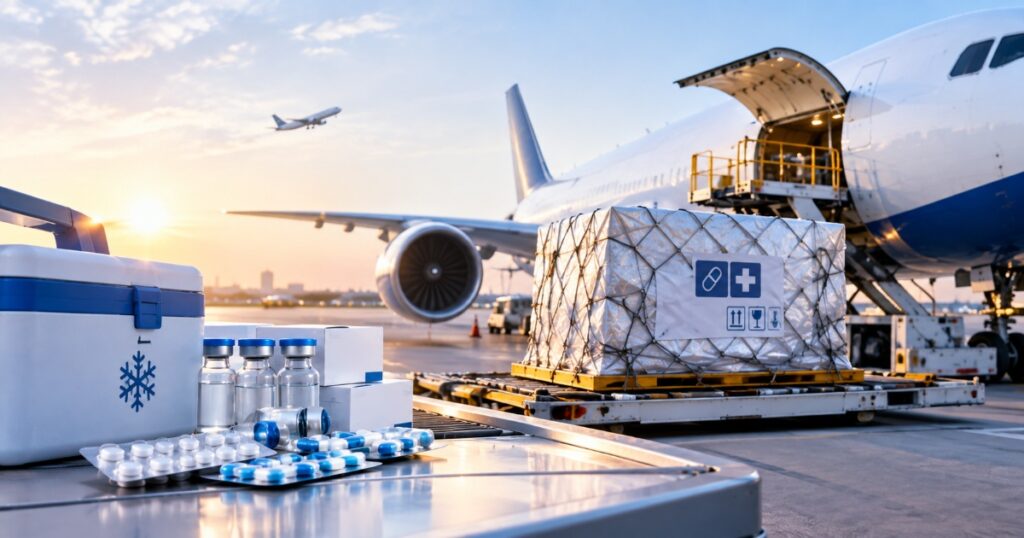
Packaging is one of the most important elements of pharmaceutical cold chain logistics. The right packaging solution depends on the product’s temperature requirements, shipment duration, external climate, route and potential transit delays.
1. Insulated Shipping Containers
Insulated containers help protect pharmaceutical products from external temperature changes. They may use qualified insulation materials and temperature-stabilising components to maintain the required conditions for a defined period.
2. Gel Packs and Refrigerants
Suitable refrigerants can help maintain the required temperature inside a shipping system. Their selection, conditioning and placement must follow the packaging design and product requirements.
Incorrect refrigerant placement or inadequate preparation can expose products to freezing or overheating.
3. Temperature Data Loggers
Temperature data loggers record conditions throughout the journey, depending on their placement and configuration. These records can help identify temperature excursions and support quality assessments.
4. Secure Secondary Packaging
Primary and secondary packaging should protect the product from physical damage, leakage and contamination as applicable. Outer packaging must also be suitable for handling and transport.
5. Clear Shipment Labelling
Pharmaceutical packages should carry the required handling information, consignee details and applicable temperature-sensitive cargo labels. Any special labelling requirements must be confirmed with the airline and relevant authorities.
Professional tip: Before dispatch, confirm that the packaging system is suitable for the anticipated transit duration, including customs delays, airport storage and possible flight disruptions.
Pharmaceutical Air Freight Compliance and Documentation
International pharmaceutical shipments may involve multiple regulatory and operational requirements. These depend on the product, country of origin, destination, intended use and applicable import or export rules.
Common documentation may include:
- Commercial invoice and packing list
- Air Waybill (AWB)
- Import or export declarations and customs documentation
- Product-specific licences or authorisations, where applicable
- Product registration or marketing authorisation documents, where required
- Certificates of analysis or other quality documents, where applicable
- Temperature-handling instructions and shipment monitoring records
- Safety data sheets or dangerous goods documentation, when applicable
For shipments involving India, businesses should verify applicable requirements with Indian Customs, the Directorate General of Foreign Trade (DGFT), the Central Drugs Standard Control Organisation (CDSCO) or other relevant authorities, depending on the product.
Certain pharmaceutical products may require additional permissions, registrations or clearances before shipment. Documentation should be reviewed before cargo dispatch to help prevent avoidable delays.
IATA’s Temperature Control Regulations (TCR) provide industry guidance on temperature-sensitive healthcare cargo, including packaging, labelling, handling and shipment acceptance.
The Pharmaceutical Air Freight Process: Step by Step
A well-planned pharmaceutical shipment follows a coordinated process from collection to final delivery.
Step 1: Shipment assessment
Identify the product, quantity, destination, required temperature range, urgency and applicable restrictions.
Step 2: Packaging preparation
Select the appropriate packaging system and prepare it according to the manufacturer’s requirements and the packaging system’s validated specifications.
Step 3: Documentation and booking
Prepare shipping documents, confirm airline acceptance conditions and arrange suitable cargo capacity.
Step 4: Pickup and airport handling
Coordinate collection and transportation to the airport. Where required, use suitable temperature-controlled ground transportation and appropriate storage facilities.
Step 5: Air transportation and monitoring
Coordinate handling with the relevant transport partners and maintain temperature monitoring where required. Contingency arrangements should address flight delays, missed connections and other disruptions.
Step 6: Customs clearance and final delivery
Complete destination formalities, arrange appropriate onward transportation and deliver the shipment to the consignee.
Step 7: Receiving and quality checks
The receiving team should inspect the shipment, review available temperature records and follow its established quality procedures if damage or a temperature excursion is identified.
Common Challenges in Pharmaceutical Air Cargo
Even carefully planned shipments can face unexpected issues. Businesses should prepare for these common risks:
- Temperature excursions: Use suitable packaging and monitoring to identify deviations.
- Flight delays: Plan realistic transit windows and contingency procedures.
- Customs documentation errors: Review destination-specific requirements before dispatch.
- Inadequate packaging: Match the packaging system to the shipment’s requirements and expected duration.
- Poor communication: Ensure that shippers, freight forwarders, handlers and consignees understand their responsibilities.
- Unclear delivery arrangements: Confirm the receiving location, operating hours and required storage conditions in advance.
Proactive planning can reduce the likelihood of disruption and improve visibility throughout the pharmaceutical supply chain.
How to Choose a Pharmaceutical Air Freight Partner
When selecting a pharmaceutical logistics provider, businesses should evaluate more than the quoted freight rate.
Look for a partner that can coordinate appropriate temperature-aware handling, suitable packaging arrangements, reliable routing, documentation support and shipment visibility.
Ask whether the proposed service can accommodate your specific temperature range, monitoring requirements, transit time and destination regulations. Where relevant, verify the qualifications and certifications of the facilities and service providers involved.
Do not assume that every freight forwarder or airline offers the same temperature-controlled infrastructure. Confirm the actual capabilities available for your route before booking.
CargoMate Logistics supports pharmaceutical and healthcare cargo movement through its air freight service offering. Businesses can discuss their shipment requirements, destination, cargo specifications and delivery timelines before finalising a transportation plan.
Why Choose CargoMate Logistics for Pharmaceutical Air Freight?
Pharmaceutical shipments require careful coordination, accurate documentation and suitable handling arrangements. CargoMate Logistics serves the pharmaceutical and healthcare sector and offers air freight solutions for different cargo requirements.
Businesses planning pharmaceutical imports or exports can explore available services for:
- Air cargo transportation planning
- Coordination of shipment documentation
- Temperature-aware handling arrangements, subject to route and service availability
- Coordination with relevant cargo and transportation partners
- Shipment planning based on destination and delivery requirements
Service suitability should be confirmed for each consignment, especially when transporting products requiring a specific temperature range or specialised regulatory approvals.
Visit CargoMate Logistics to discuss your pharmaceutical air freight requirements and request a suitable shipping solution.
Frequently Asked Questions (FAQs)
1. What is pharmaceutical air freight?
Pharmaceutical air freight is the transportation of medicines, vaccines and other healthcare products by aircraft under handling, packaging and environmental conditions suitable for the products.
2. What temperature is required for pharmaceutical air freight?
The required temperature depends on the product and manufacturer’s specifications. Some products require +2°C to +8°C, while others require controlled room temperature, frozen conditions or a different range.
3. Which packaging is used for temperature-controlled pharmaceutical shipping?
Common options include insulated containers, qualified thermal packaging, gel packs, suitable refrigerants and temperature data loggers. The appropriate solution depends on the product and shipment requirements.
4. What documents are required for pharmaceutical exports from India?
Common documents include a commercial invoice, packing list, Air Waybill, customs declarations and applicable product-specific licences or certificates. Exact requirements depend on the medicine, destination and applicable regulations.
5. How can businesses prevent temperature excursions during air freight?
Businesses can reduce risks through suitable packaging, validated shipping configurations, temperature monitoring, planned routing, trained handling partners and contingency arrangements for delays.
6. Is pharmaceutical air freight suitable for international shipments?
Yes. Air freight is commonly used for international pharmaceutical shipments, provided the product is eligible for transport and the shipment meets applicable airline, customs and destination-country requirements.
7. How can I arrange pharmaceutical air freight with CargoMate Logistics?
Visit the CargoMate Logistics website and share your origin, destination, product type, quantity, temperature requirements and preferred delivery timeline to discuss an appropriate shipping arrangement.
Conclusion
Pharmaceutical air freight requires a coordinated approach to temperature control, packaging, compliance and transportation planning. From selecting suitable thermal packaging to preparing documentation and arranging final delivery, each stage contributes to protecting product quality.
For pharmaceutical manufacturers, importers, exporters and healthcare distributors, working with a logistics partner that understands these requirements can help improve shipment planning and reduce avoidable risks.
Need pharmaceutical air freight solutions for your business? Contact CargoMate Logistics to discuss your shipment requirements and explore suitable international air cargo options.