International Freight Forwarding from India: Air Freight, Sea Freight and Door-to-Door Shipping
International trade depends on reliable transportation, accurate documentation and efficient coordination between suppliers, exporters, importers and logistics providers. Businesses shipping commercial goods across international borders need more than transportation alone. They require a structured logistics process that manages cargo movement, freight bookings, customs procedures and final delivery.
This is where international freight forwarding from India becomes important.
Whether a business is exporting products to international markets or importing raw materials, machinery, electronics and commercial goods, selecting the right freight forwarding solution can influence shipping costs, delivery schedules and overall supply-chain efficiency.
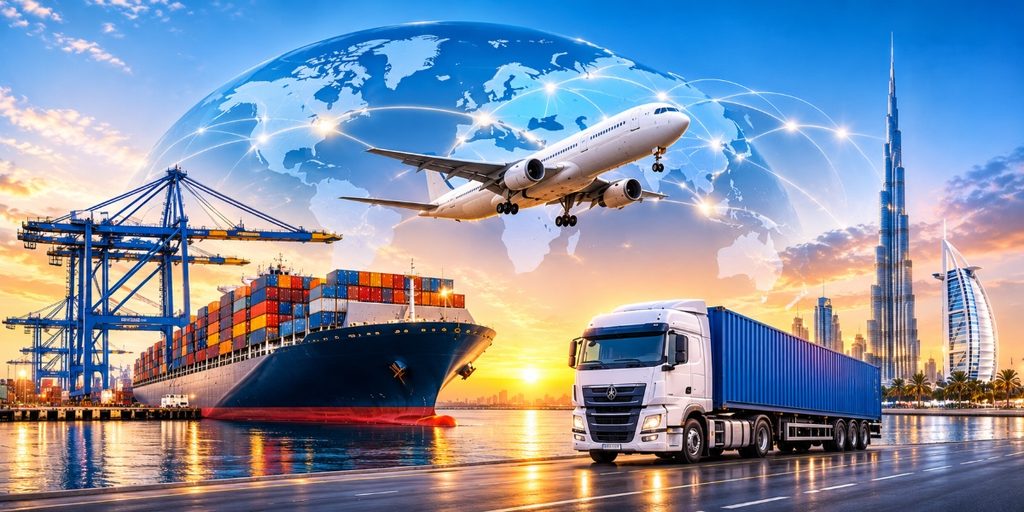
Freight forwarding companies coordinate different stages of international cargo transportation through air freight, sea freight and door-to-door shipping services. The appropriate option depends on shipment size, cargo type, destination, budget and delivery requirements.
In this guide, we explain how international freight forwarding works, the differences between air and sea freight, door-to-door shipping, documentation requirements and important factors businesses should consider before selecting a freight forwarder in India.
1. What Is International Freight Forwarding?
International freight forwarding is the process of organising and coordinating the transportation of goods from one country to another.
A freight forwarder acts as a logistics coordinator between the shipper, consignee, transportation providers, customs representatives and other parties involved in moving cargo internationally.
Rather than managing every transportation activity independently, businesses can work with a freight forwarding company to coordinate shipment arrangements according to their requirements.
Key responsibilities of a freight forwarder
- Coordinating international cargo transportation.
- Arranging air freight and ocean freight services.
- Booking cargo space with airlines and shipping lines.
- Coordinating cargo pickup and delivery.
- Supporting export-import documentation.
- Coordinating customs clearance procedures.
- Managing shipment tracking and transportation updates.
- Arranging suitable logistics solutions for different cargo types.
For Indian importers and exporters, freight forwarding helps simplify international shipping by bringing multiple logistics activities under coordinated management.
2. Air Freight Services from India: Best for Time-Sensitive Shipments
Air freight is a popular transportation method for businesses that need to move cargo internationally within shorter transit times.
It is commonly used for high-value products, urgent commercial shipments, electronics, pharmaceuticals and other goods requiring faster transportation.
Indian businesses exporting products to markets such as the UAE, Europe, the USA and Southeast Asia may consider air cargo when delivery schedules are important.
Advantages of air freight
Faster transportation: Air freight generally offers shorter transit times compared with ocean freight, although actual schedules depend on the route, airline capacity, handling and customs procedures.
Suitable for urgent cargo: Businesses can use air freight when inventory replenishment or customer delivery deadlines require faster transportation.
Useful for high-value goods: Products with high commercial value and relatively low shipment weight may be suitable for air transportation.
International connectivity: Air cargo networks connect major Indian airports with international markets.
What affects air freight charges?
Air freight costs are influenced by several factors:
- Actual cargo weight.
- Volumetric weight.
- Origin and destination airports.
- Cargo dimensions.
- Commodity type.
- Airline availability and capacity.
- Fuel-related and other applicable surcharges.
- Special handling requirements.
Air freight charges are commonly calculated using chargeable weight, which considers actual weight and volumetric weight according to the applicable airline or service-provider rules.
Businesses should provide accurate cargo dimensions and weight before requesting a quotation.
3. Sea Freight Services from India: Economical for Larger Shipments
Sea freight, also known as ocean freight, is widely used for transporting commercial cargo, industrial goods, machinery, raw materials and large-volume shipments.
For businesses importing or exporting substantial quantities of goods, ocean freight can provide a cost-effective transportation option compared with air freight.
Indian ports such as Nhava Sheva, Mundra, Chennai and other major port facilities support international cargo movement through different shipping services.
Types of sea freight services
FCL – Full Container Load
FCL shipping involves using a dedicated container for a shipment. It is generally suitable when cargo volume is sufficient to utilise a container efficiently.
Common container options include 20-foot and 40-foot containers, subject to cargo and carrier requirements.
LCL – Less than Container Load
LCL shipping allows businesses to transport smaller quantities of cargo by sharing container space with other shipments.
It can be useful for importers and exporters who do not require an entire container.
Advantages of sea freight
- Suitable for large-volume commercial cargo.
- Offers different container transportation options.
- Supports heavy and bulky shipments, subject to equipment and route availability.
- Can provide economical transportation for non-urgent cargo.
- Supports international supply chains across major trading markets.
What affects ocean freight costs?
Sea freight quotations may depend on:
- Container type and size.
- FCL or LCL shipment arrangement.
- Origin and destination ports.
- Shipping route and transit time.
- Cargo weight and volume.
- Shipping line availability.
- Port handling and documentation charges.
- Applicable surcharges and destination expenses.
Importers and exporters should compare the complete shipping cost instead of considering only the basic ocean freight rate.
4. Air Freight vs Sea Freight: Which Is Better for Your Business?
Selecting between air freight and sea freight depends on the shipment’s urgency, size, value and transportation budget.
| Comparison | Air Freight | Sea Freight |
| Transportation Time | Generally faster | Generally longer |
| Cost | Usually higher per unit of cargo | Often economical for larger shipments |
| Cargo Suitability | Urgent and high-value goods | Bulk, heavy and large-volume cargo |
| Shipment Size | Suitable for smaller and medium shipments | Suitable for small to large shipments |
| Transportation | Aircraft | Cargo vessels |
| Best Use | Time-sensitive delivery | Planned commercial transportation |
How to choose the right option
Choose air freight when:
- Goods are required urgently.
- Delivery deadlines are important.
- Cargo has a high value relative to its weight.
- Faster inventory replenishment is necessary.
Choose sea freight when:
- Cargo volume is substantial.
- Transportation costs need to be optimised.
- Goods are not urgently required.
- Container shipping is suitable for the shipment.
Businesses should also consider customs clearance, inland transportation, storage and final delivery when comparing the total logistics cost.
5. Door-to-Door International Shipping from India
Door-to-door shipping is a logistics arrangement in which cargo transportation is coordinated from the pickup location to the agreed delivery address.
It can simplify international shipping for businesses that prefer a coordinated service instead of separately arranging every transportation stage.
Depending on the agreed service scope, door-to-door logistics may include:
- Cargo pickup from the supplier or exporter.
- Transportation to the departure airport or seaport.
- Export documentation and customs coordination.
- International air or ocean freight.
- Destination handling and customs clearance coordination.
- Inland transportation to the final delivery location.
Benefits of door-to-door shipping
Convenience: Businesses can coordinate multiple shipping activities through one logistics arrangement.
Better shipment coordination: Pickup, transportation and delivery schedules can be planned together.
Reduced administrative workload: Businesses may avoid separately coordinating several logistics providers.
Improved shipment visibility: A coordinated arrangement can make it easier to monitor different transportation stages.
However, businesses should confirm whether customs duties, taxes, insurance, unloading, storage and destination charges are included in the quotation.
Door-to-door shipping does not automatically mean that every expense or customs obligation is covered. The agreed service terms and Incoterms should be reviewed carefully.
6. Essential Documents Required for International Freight Forwarding
Accurate documentation is essential for international cargo transportation and customs processing.
Documentation requirements depend on the product, origin, destination, transaction and applicable regulations.
Common documents include:
| Document | Purpose |
| Commercial Invoice | Provides transaction and goods-value details |
| Packing List | Contains package-wise cargo details |
| Bill of Lading | Main transport document for sea freight |
| Airway Bill | Main transport document for air freight |
| Shipping Bill | Export customs declaration in India |
| Bill of Entry | Import customs declaration in India |
| Certificate of Origin | Establishes the origin of goods where required |
| Insurance Certificate | Provides evidence of applicable cargo insurance |
| IEC | Importer Exporter Code, where applicable |
Certain goods may require additional licences, certificates, testing reports or regulatory approvals.
Before cargo dispatch, businesses should verify product descriptions, HS codes, quantities, values, consignee details and other shipment information.
Incomplete or inconsistent documentation can result in customs queries, cargo delays and additional expenses.
7. Factors to Consider When Selecting a Freight Forwarder in India
Choosing a suitable freight forwarding company is an important part of managing international logistics.
Businesses should evaluate the provider’s service capabilities and ability to coordinate shipments according to their requirements.
Consider these factors:
International shipping services: Check whether the company can coordinate air freight, ocean freight and suitable door-to-door arrangements.
Customs documentation support: Verify its ability to assist with shipment documentation and customs clearance coordination.
Transparent freight quotations: Request a clear breakdown of transportation, handling and additional charges.
Cargo handling experience: Consider whether the provider can support your cargo type, dimensions and handling requirements.
Shipment coordination: Look for clear communication regarding booking, dispatch, transit and delivery updates.
Destination coverage: Confirm whether the provider can support the required origin-destination route and destination arrangements.
A suitable freight forwarding partner should understand both transportation requirements and the documentation involved in international trade.
8. How to Reduce International Freight Forwarding Costs
Businesses can improve shipping efficiency by planning shipments before cargo is ready for dispatch.
Some practical cost-management strategies include:
- Book air or ocean freight in advance where possible.
- Compare FCL and LCL options based on shipment volume.
- Consolidate compatible cargo when commercially practical.
- Optimise packaging and cargo dimensions.
- Provide accurate shipment weight and measurements.
- Prepare customs documentation before dispatch.
- Compare complete freight quotations and destination charges.
- Avoid unnecessary storage, demurrage and detention expenses.
- Select transportation according to actual delivery urgency.
The cheapest freight quotation is not always the most economical solution. Businesses should consider the total landed logistics cost, reliability and delivery requirements.
9. International Freight Forwarding Solutions with CargoMate Logistics
Managing international cargo requires coordination, accurate documentation and appropriate transportation planning.
CargoMate Logistics supports businesses involved in import and export operations with international freight forwarding and logistics services.
Our services include:
- Air Freight Services: Transportation solutions for urgent and time-sensitive international cargo.
- Ocean Freight Services: FCL and LCL shipping coordination for commercial shipments.
- Land Freight Services: Cargo transportation support for suitable domestic and cross-border movements.
- Customs Clearance Coordination: Assistance with import-export customs procedures and shipment documentation.
- Door-to-Door Logistics Coordination: Transportation planning from pickup to agreed delivery locations, subject to route and service availability.
Whether you are importing commercial goods into India or exporting products to international markets, CargoMate Logistics helps coordinate transportation according to your shipment requirements.
Looking for an international freight forwarding company in India?
Contact CargoMate Logistics to discuss your cargo requirements and shipping options.
CargoMate Logistics – Your Trusted Partner in Cargo, Logistics & Freight Services
Frequently Asked Questions
1. What does an international freight forwarding company do?
An international freight forwarding company coordinates cargo transportation between countries, including freight bookings, shipping arrangements, documentation support and customs clearance coordination.
2. What is the difference between air freight and sea freight?
Air freight transports cargo by aircraft and is generally faster. Sea freight transports goods through cargo vessels and is often more economical for larger shipments.
3. What is door-to-door international shipping?
Door-to-door shipping is a logistics arrangement that coordinates cargo movement from the pickup address to the agreed destination address, subject to the services and responsibilities included in the agreement.
4. How are international freight charges calculated?
Freight charges depend on the transportation method, cargo weight, dimensions, volume, origin, destination, route, carrier availability and applicable additional charges.
5. What documents are required for international freight forwarding from India?
Common documents include the commercial invoice, packing list, Bill of Lading or Airway Bill, Shipping Bill or Bill of Entry, IEC and applicable product-specific certificates or permissions.
6. Is LCL cheaper than FCL shipping?
LCL may be suitable for smaller shipments that do not require a full container. FCL may offer better value when cargo volume is sufficient. The total freight and destination costs should be compared before deciding.
7. How can I choose the right freight forwarding company in India?
Compare service coverage, freight quotations, customs documentation support, cargo handling capabilities, communication and experience with your required shipping route.
Conclusion
International freight forwarding plays an important role in connecting Indian businesses with global markets. Selecting the right transportation method, preparing accurate documentation and coordinating customs procedures can help businesses manage international shipments more efficiently.
Air freight is suitable for time-sensitive cargo, sea freight supports larger commercial shipments, and door-to-door shipping offers coordinated transportation from pickup to delivery.
For businesses looking for reliable international freight forwarding from India, working with an experienced logistics partner can simplify cargo movement and improve shipment planning.
Connect with CargoMate Logistics for air freight, ocean freight, customs clearance coordination and international cargo shipping support.