India’s Gold Imports from UAE Rise 175%: What Businesses Need to Know
India’s gold imports from UAE rise 175% is attracting significant attention in 2026. According to recent trade data, India imported $649.4 million worth of gold from the UAE in June 2026, marking a 175.2% increase compared with June 2025. The UAE’s share of India’s monthly gold imports also increased substantially during the period.
The trend becomes even more significant when viewed quarterly. Between April and June 2026, India’s gold imports from the UAE increased by 124.8% to $3.14 billion, making the UAE an increasingly important source in India’s gold import supply chain.
For businesses involved in bullion trading, jewellery manufacturing, precious-metal sourcing and international trade, this development highlights an important issue: moving gold from the UAE to India requires much more than arranging transportation. Importers must manage documentation, regulatory requirements, customs clearance, secure cargo handling, applicable duties and coordinated delivery.
This is where professional international logistics and customs support can make a significant difference.
Planning to Import Gold from UAE to India?
Get secure air freight, customs clearance, documentation, and end-to-end logistics support from CargoMate Logistics.
Why Are India’s Gold Imports from the UAE Increasing?
Several factors are contributing to the growing importance of the UAE in India’s gold import landscape.
One major factor is the India-UAE Comprehensive Economic Partnership Agreement (CEPA) and the preferential tariff framework associated with eligible gold imports. Recent reporting has highlighted a one-percentage-point tariff difference for qualifying UAE-origin gold compared with the standard rate.
The UAE also has an established position as a major global trading and refining hub for precious metals. Dubai, in particular, has developed extensive infrastructure around bullion trading, jewellery, refining, storage and international trade.
For Indian businesses, this creates an established commercial route between UAE suppliers and Indian importers.
However, preferential treatment does not mean that gold can simply be shipped into India without compliance. Importers still need to satisfy the applicable customs, origin, authorisation and documentation requirements.
What Businesses Need to Know Before Importing Gold from UAE to India

Gold is a high-value commodity, so its logistics requirements are different from ordinary commercial cargo.
Before arranging a shipment, an importer should evaluate:
- Eligibility to import the specific gold product
- Applicable tariff and customs requirements
- Whether a Tariff Rate Quota (TRQ) or other authorisation applies
- Certificate of Origin requirements
- Commercial invoice and packing documentation
- Correct HS classification
- Customs declaration requirements
- Applicable duties and taxes
- Secure transportation arrangements
- Airport handling and cargo security
- Insurance and risk management
- Final delivery arrangements
For eligible India-UAE CEPA gold imports, documentation and origin requirements are particularly important. Recent guidance on the CEPA framework notes the importance of applicable customs notifications and a Certificate of Origin at clearance.
Therefore, businesses should not look at the headline tariff alone. The complete landed cost and compliance process should be assessed before the shipment moves.
Gold Import Process from UAE to India
For businesses considering UAE-to-India gold imports, the process can broadly be understood through the following stages.
1. Verify Import Eligibility
The first step is determining whether the importer is eligible to import the relevant gold product and whether any specific authorisation, quota or regulatory condition applies.
For imports under the India-UAE CEPA framework, businesses should verify the current requirements applicable to their shipment before booking cargo.
This is particularly important because gold is a regulated and high-value commodity.
2. Confirm Product Classification and Origin
The importer and logistics partner need to establish exactly what is being imported.
This may include gold bars, bullion or other permitted gold products. The correct HS classification must be determined because classification affects customs treatment and documentation.
Origin is also important where preferential tariff treatment is being claimed. A Certificate of Origin may be required to establish eligibility under the relevant trade arrangement.
3. Prepare Import Documentation
Proper documentation is one of the most important parts of the process.
Depending on the shipment and applicable regulations, documentation can include:
- Commercial invoice
- Packing list
- Air waybill or applicable transport document
- Certificate of Origin
- Importer and regulatory details
- Applicable authorisation or TRQ documentation
- Customs declarations
- Product-related certificates and supporting documents
- Insurance documentation
Documentation should be checked before shipment departure rather than waiting until the cargo reaches India.
A documentation error involving high-value cargo can create unnecessary delays and additional costs.
4. Arrange Secure UAE-to-India Transportation
Because gold has a very high value relative to its physical size, transportation requires careful planning.
For international gold shipments, air freight is generally more suitable than conventional ocean freight because it offers faster transit and is better suited to high-value, time-sensitive cargo.
The logistics plan should consider:
- Secure origin handling
- Airline/cargo selection
- Airport procedures
- Transit planning
- Security arrangements
- Insurance
- Shipment tracking
- Destination handling
The objective is not simply to move the cargo quickly but to maintain security and control throughout the transportation process.
5. Arrival at the Indian Airport
Once the shipment arrives in India, it enters the destination handling and customs process.
The cargo is handled through the applicable airport cargo infrastructure, where documentation and customs procedures are completed.
This is one of the stages where experienced customs clearance support can help businesses avoid avoidable delays.
The documentation submitted should accurately correspond with the actual shipment, declared value, classification and applicable regulatory requirements.
6. Customs Clearance in India
Customs clearance is a critical stage in the gold import process.
The importer or authorised customs representative must complete the applicable customs formalities and submit the required documentation.
Authorities may examine:
- Product classification
- Declared value
- Country of origin
- Applicable tariff
- Supporting certificates
- Import authorisation
- Compliance with applicable regulations
Where preferential treatment under the India-UAE CEPA is being claimed, businesses should ensure that all eligibility and supporting documentation requirements have been properly satisfied.
A professional customs clearance partner can coordinate documentation, declarations and communication with the relevant stakeholders.
7. Payment of Applicable Duties and Taxes
After assessment, the importer must pay the applicable customs duties, taxes and other charges associated with the shipment.
Businesses should calculate the expected landed cost before importing.
The landed cost can include:
Product Cost + International Freight + Insurance + Customs Duty + Taxes + Customs Clearance Charges + Handling + Other Applicable Charges
Understanding the complete landed cost helps importers determine their actual margins rather than evaluating the shipment only on the purchase price.
8. Cargo Release
Once customs requirements have been completed and applicable payments and formalities are satisfied, the shipment can be released according to the applicable procedures.
At this stage, coordination between the importer, customs clearance team, airport cargo handler and logistics provider becomes important.
9. Secure Final Delivery
The final stage is transportation from the airport or designated cargo facility to the importer’s authorised destination.
For high-value commodities such as gold, final-mile movement should be planned with the same level of attention as international transportation.
Security, documentation, handover procedures and delivery confirmation should all be properly coordinated.
Why Professional Logistics Support Matters for Gold Imports
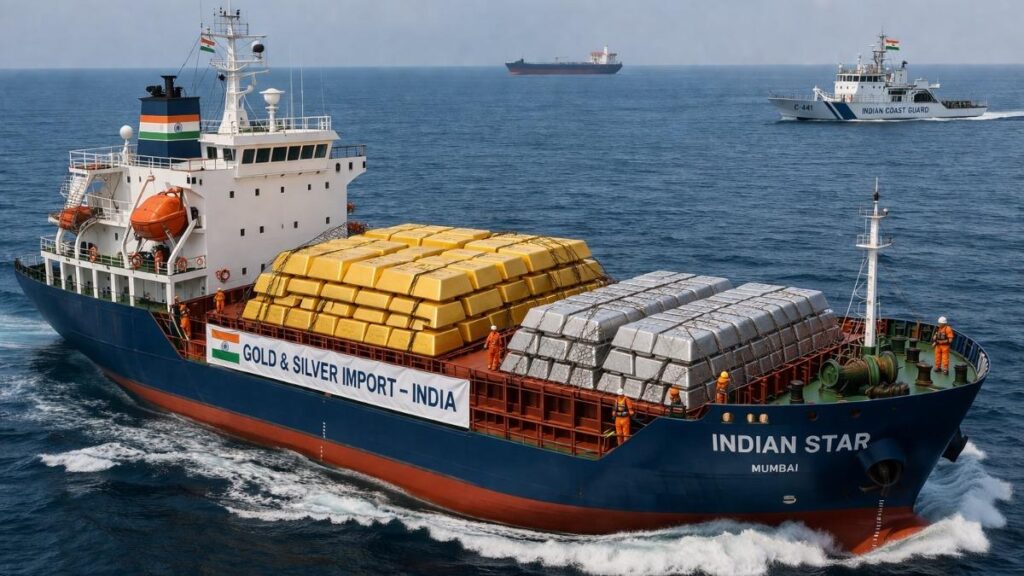
Gold shipments are fundamentally different from normal commercial cargo.
A standard logistics process may focus primarily on freight rates and transit time. A gold shipment requires a much broader approach involving security, compliance, customs, documentation and controlled handling.
Some common challenges include:
Documentation discrepancies
Even minor differences between commercial documents and customs declarations can create questions or delays.
Customs delays
Incomplete documentation, classification issues or missing supporting documents can slow down the clearance process.
Regulatory changes
Import requirements, tariff structures, quotas and trade-related procedures can change. Businesses need to verify the rules applicable at the time of shipment.
Security risks
Because of the high value of the cargo, secure handling and controlled transportation are essential.
Cost calculation
A low freight rate does not necessarily mean a low landed cost. Importers need to account for customs duties, taxes, handling, insurance and other charges.
How CargoMate Logistics Supports UAE-to-India Gold Import Shipments
CargoMate Logistics provides international freight forwarding and customs clearance support for businesses managing cross-border cargo between the UAE and India.
For high-value commercial shipments, our role is to help coordinate the logistics process from transportation planning through customs clearance and final delivery.
Our support can include:
Air Freight Coordination:
Planning international air cargo movement between the UAE and India with attention to transit requirements and shipment handling.
Customs Clearance:
Assisting importers with customs documentation, declarations and coordination required for clearance.
Import Documentation Support:
Helping businesses organise and verify the documentation required for international cargo movement.
Secure Cargo Coordination:
Supporting controlled handling and transportation planning for high-value shipments.
Door-to-Door Logistics:
Coordinating transportation from the supplier’s location through international movement, destination handling, customs clearance and final delivery where applicable.
Regulatory Support:
Helping businesses understand and coordinate applicable import/export and regulatory requirements.
The exact documentation, duty structure, authorisations and procedures depend on the nature of the gold shipment and the regulations applicable at the time of import. Businesses should verify these requirements before shipment execution.
UAE to India Gold Logistics: What Importers Should Plan in Advance
Businesses planning recurring gold imports should establish a structured logistics process rather than arranging every shipment independently.
A practical checklist includes:
- Verify importer eligibility.
- Confirm product classification.
- Check applicable CEPA/TRQ requirements.
- Verify origin documentation.
- Prepare commercial and shipping documents.
- Calculate expected landed cost.
- Select an appropriate air cargo route.
- Arrange insurance and security procedures.
- Coordinate customs clearance before arrival.
- Complete applicable duties and regulatory formalities.
- Obtain cargo release.
- Arrange secure final delivery.
Advance planning can reduce unnecessary delays and make the import process more predictable.
What This Gold Import Surge Means for Logistics Businesses
The sharp increase in UAE-origin gold imports demonstrates how trade agreements, international commodity markets and logistics networks can interact.
As UAE-India gold trade expands, demand may also increase for specialised services covering:
- Air freight
- Customs clearance
- Import documentation
- Secure cargo handling
- International freight forwarding
- Regulatory coordination
- Door-to-door logistics
For logistics companies, this represents an opportunity to provide more specialised support rather than competing only on freight prices.
For importers, it reinforces the importance of selecting a logistics partner that understands both international transportation and Indian customs procedures.
Final Thoughts
India’s gold imports from the UAE have become an important development in the country’s 2026 trade landscape. Imports from the UAE rose 175.2% year-on-year in June 2026, while UAE-origin gold imports increased 124.8% during April–June 2026.
For businesses involved in bullion, jewellery and precious-metal trading, the opportunity comes with significant compliance and logistics responsibilities.
From UAE sourcing and secure air freight to documentation, customs clearance, applicable duties and final delivery, every stage needs to be properly coordinated.
CargoMate Logistics helps businesses manage international cargo movement with freight forwarding, customs clearance and end-to-end logistics support. If you are planning to import high-value cargo from the UAE to India, professional logistics coordination can help make the process more structured, compliant and efficient.
Planning a UAE-to-India shipment? Contact CargoMate Logistics at +91 99108 47721 or email info@cargomatelogistics.in to discuss your logistics and customs requirements.