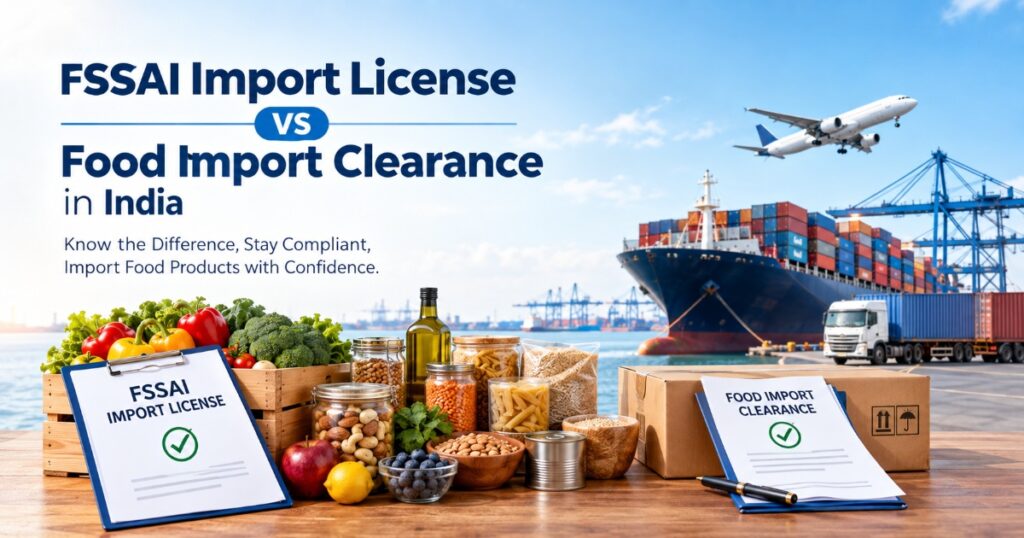
FSSAI Import License vs Food Import Clearance in India: Complete Guide for Importers Before Customs Clearance
Importing food products into India is no longer just about customs clearance. Every shipment containing packaged food, beverages, dry fruits, chocolates, health supplements, edible oils, spices, dairy products, or processed food must also comply with Food Safety and Standards Authority of India (FSSAI) regulations before it can enter the Indian market.
One of the biggest misconceptions among importers is that an FSSAI Import License and FSSAI Food Import Clearance are the same. They are not. An import license allows your business to legally import food products, while food import clearance is the approval process that happens for every eligible shipment after it arrives at an Indian port or airport.
Understanding this difference is essential for manufacturers, distributors, wholesalers, retailers, supermarkets, hotels, restaurants, cloud kitchens, and e-commerce businesses importing food into India.
Planning to import food products into India? CargoMate Logistics provides complete assistance with FSSAI Registration, Food Import Clearance, customs documentation, FICS portal compliance, and end-to-end customs clearance services across major Indian ports and airports.
This guide explains the complete food import compliance process, documents required, timelines, labeling rules, and common mistakes importers should avoid.
Why Understanding FSSAI Compliance is Important
India has strengthened food import compliance to ensure imported food products meet national safety standards before reaching consumers. Customs authorities and FSSAI work together during the clearance process, making documentation accuracy extremely important.
If an importer misses FSSAI requirements, shipments may face:
- Customs clearance delays.
- Sampling and testing delays.
- Label correction notices.
- Additional documentation requests.
- Shipment detention until compliance is completed.
For businesses importing regularly, understanding the correct process saves both time and logistics costs.
What is an FSSAI Import License?
An FSSAI Import License is the license issued to eligible food business operators who import food products into India. It authorizes the business to undertake food import activities under the Food Safety and Standards framework.
Think of it as your business authorization before importing food commercially.
Who Needs an FSSAI Import License?
Businesses importing food into India, including:
- Food import companies.
- FMCG importers.
- Supermarkets.
- Restaurant chains.
- Hotels.
- Food distributors.
- E-commerce food sellers.
- Health supplement importers.
- Beverage importers.
- Organic food importers.
Why It Matters
An FSSAI Import License helps establish your food business as an authorized importer before customs clearance begins.
Common Documents Required
- IEC Registration.
- GST Registration.
- PAN.
- Business incorporation documents.
- Address proof.
- Authorized signatory documents.
- Import Export business details.
Businesses should obtain the required FSSAI license before scheduling commercial food imports.
What is FSSAI Food Import Clearance?
FSSAI Food Import Clearance is the shipment-level approval process completed after imported food reaches India.
Every eligible shipment is reviewed through the Food Import Clearance System (FICS) before customs gives final release where applicable.
Food Import Clearance Includes
- Document verification.
- Label verification.
- Product scrutiny.
- Sampling (where required).
- Laboratory testing (for selected consignments).
- No Objection Certificate (NOC) or clearance decision based on compliance.
This means even if your business has a valid FSSAI license, every shipment may still undergo food import clearance procedures.
FSSAI Import License vs Food Import Clearance: What’s the Difference?
| FSSAI Import License | FSSAI Food Import Clearance |
| Business-level authorization. | Shipment-level clearance process. |
| Obtained before importing food. | Completed after cargo arrives in India. |
| Required for eligible food import businesses. | Required for eligible imported food consignments. |
| Linked with food business operations. | Linked with customs and FICS documentation. |
| One license can support multiple shipments. | Each shipment follows the clearance process separately. |
Simple Understanding
- License = Permission to import food as a business.
- Food Import Clearance = Permission for an individual shipment to enter India after compliance verification.
Understanding this distinction helps businesses prepare documentation correctly before cargo reaches customs.
Complete Food Import Process in India
Importing food products involves multiple compliance steps.
Step 1 — Obtain IEC Registration
Every importer must first obtain an Import Export Code before importing goods into India.
Step 2 — Obtain FSSAI Import License
Complete licensing requirements for the importing business.
Step 3 — Purchase Food Products from Overseas Supplier
Collect invoices, packing lists, certificates, and labeling information before shipment dispatch.
Step 4 — Shipment Arrives at Indian Port or Airport
Cargo reaches customs through seaport, airport, ICD, or courier gateway.
Step 5 — File Customs Documentation
Submit Bill of Entry and required import documents.
Step 6 — Submit Documents Through FICS
Food import documents are uploaded and verified through the Food Import Clearance System.
Step 7 — Inspection, Sampling, or Testing (Where Applicable)
Certain products undergo inspection or laboratory testing.
Step 8 — Receive FSSAI Clearance
After successful verification, customs processing moves toward shipment release according to applicable procedures.
Complete Food Import Documents Checklist Before Customs Clearance
Every importer should prepare documentation before cargo arrives.
Mandatory Import Documents
- IEC Certificate.
- FSSAI Import License.
- Commercial Invoice.
- Packing List.
- Bill of Lading or Air Waybill.
- Bill of Entry.
- Certificate of Origin.
- Product Ingredient Details.
- Manufacturer Declaration.
- Importer Authorization Documents.
Product-Specific Documents
Depending on food category:
- Certificate of Analysis.
- Health Certificate.
- Phytosanitary Certificate.
- Veterinary Certificate.
- Organic Certification.
- Shelf-Life Declaration.
Shipment Documents
- Insurance documents.
- Freight documents.
- Purchase Order.
- Product specifications.
Keeping documents ready before shipment arrival reduces clearance delays.
FICS Portal Explained for Food Importers
The Food Import Clearance System (FICS) is the digital platform used for food import compliance in India.
What Importers Use FICS For
- Upload shipment documents.
- Submit food import applications.
- Track application status.
- Respond to document queries.
- Receive clearance updates.
Why FICS is Important
It creates a digital workflow between customs authorities and food import compliance procedures, reducing manual paperwork for importers.
Businesses importing regularly should maintain accurate digital documentation for faster processing.
Food Labeling Rules Every Importer Should Verify Before Shipment Leaves the Exporting Country
Incorrect labeling is one of the biggest reasons imported food consignments receive compliance queries.
Imported Food Label Checklist
Verify the label includes:
- Product name.
- Ingredient list.
- Nutritional information.
- Vegetarian or non-vegetarian symbol where applicable.
- Net quantity.
- Manufacturer details.
- Importer name and address.
- Country of origin.
- Batch number.
- Manufacturing date.
- Best Before or Expiry Date.
- Storage instructions.
Why Label Verification Matters
Correct labels before shipment dispatch help reduce correction requests after cargo reaches India.
Importers should verify artwork and packaging before overseas production begins.
Import Food Products into India with CargoMate Logistics
Simplify FSSAI Registration, Food Import Clearance & Customs Compliance
Food imports involve customs documentation, FSSAI compliance, labeling verification, FICS portal submissions, and shipment coordination. Managing every step separately can increase delays and compliance risks.
CargoMate Logistics helps businesses with:
- FSSAI Import License assistance
- Food Import Clearance support
- Customs clearance documentation
- FICS portal guidance
- Import documentation verification
- Label compliance assistance
- Air freight and sea freight food imports
- Door-to-door import logistics
Whether you’re importing chocolates, beverages, packaged food, dry fruits, spices, dairy products, or health supplements, CargoMate Logistics provides complete food import compliance support.
Which Food Products Require FSSAI Food Import Clearance?
Many food categories entering India require compliance review before release.
Common Imported Food Categories
- Packaged food.
- Chocolates and confectionery.
- Coffee and tea.
- Dry fruits and nuts.
- Dairy products.
- Cheese and butter.
- Olive oil and edible oils.
- Frozen food.
- Processed food.
- Sauces and condiments.
- Beverages and juices.
- Health supplements.
- Organic food products.
- Baby food.
- Ready-to-eat products.
Different food categories may require additional supporting certificates depending on applicable regulations.
Customs Clearance vs FSSAI Food Import Clearance
Many importers confuse customs clearance with FSSAI approval.
Customs Clearance Covers
- Import duty assessment.
- Bill of Entry processing.
- Customs examination.
- Import documentation verification.
- Cargo release procedures.
FSSAI Food Import Clearance Covers
- Food safety compliance.
- Label verification.
- Ingredient verification.
- Sampling requirements.
- Laboratory testing where applicable.
- Shipment approval for eligible food products.
Both processes often work together before imported food is released for domestic distribution.
How Long Does FSSAI Food Import Clearance Take?
Clearance timelines depend on several factors.
Timeline Can Vary Based On
- Product category.
- Port congestion.
- Documentation accuracy.
- Sampling requirements.
- Laboratory testing.
- Label compliance.
- Response time for document queries.
Submitting complete documents before cargo arrival generally helps reduce avoidable delays.
Five Common Mistakes That Delay Food Import Clearance
Avoiding these mistakes helps businesses move shipments faster.
1. Incorrect Food Labels
Missing importer information or incorrect declarations often trigger compliance queries.
2. Missing Product Certificates
Incomplete health or analysis certificates may delay document approval.
3. Incorrect HS Code or Product Classification
Wrong product classification creates customs and compliance complications.
4. Incomplete FICS Documentation
Uploading incomplete or incorrect documents slows processing.
5. Waiting Until Shipment Arrives
Preparing documents after cargo reaches India increases storage costs and clearance delays.
Port-Wise Food Import Clearance in India
Food imports arrive through multiple gateways across India.
Major Food Import Locations
- ICD Tughlakabad.
- Nhava Sheva (JNPT).
- Mumbai Air Cargo.
- Chennai Port.
- Mundra Port.
- Kolkata Port.
- Bengaluru Air Cargo.
- Hyderabad Air Cargo.
- Cochin Port.
Each port follows customs procedures while coordinating applicable food import compliance requirements.
Food Import Compliance Checklist for First-Time Importers
Before placing your first import order, verify the following checklist.
Business Checklist
- IEC Registration completed.
- FSSAI Import License available.
- GST registration verified where applicable.
- Import bank account active.
Documentation Checklist
- Invoice.
- Packing List.
- Bill of Lading or Air Waybill.
- Bill of Entry.
- Certificate of Origin.
- Product Specifications.
- Ingredient List.
- Manufacturer Documents.
Compliance Checklist
- Label artwork verified.
- Shelf-life verified.
- Product category confirmed.
- FICS documentation prepared.
- Customs documents organized.
Preparing this checklist before shipment dispatch minimizes compliance issues.
Why Professional Food Import Clearance Support Saves Time
Food imports involve coordination between suppliers, freight forwarders, customs brokers, testing authorities, and compliance systems. A small documentation error can result in additional storage charges, examination delays, or shipment holds.
Working with experienced import compliance professionals helps businesses:
- Review documents before shipment dispatch.
- Verify labeling requirements.
- Prepare customs documentation.
- Coordinate FSSAI clearance procedures.
- Reduce avoidable customs delays.
This becomes especially valuable for businesses importing commercial food consignments regularly.
Frequently Asked Questions (FAQs)
Is an FSSAI Import License enough to import food into India?
No. A valid FSSAI license authorizes the business, while imported food consignments may still require shipment-level food import clearance procedures.
Does every imported food shipment go through FSSAI clearance?
Eligible food consignments follow applicable food import compliance procedures after arrival in India.
What is the FICS Portal?
FICS is the online system used for food import document submission, compliance processing, and shipment tracking during food import clearance.
Can imported food be released without correct labeling?
Incorrect labeling may lead to compliance queries or corrective requirements before shipment release.
Which businesses should obtain FSSAI Import Registration?
Businesses importing packaged food, beverages, edible products, processed food, supplements, dairy products, chocolates, dry fruits, spices, and similar food categories should complete applicable FSSAI compliance requirements.
Conclusion: Know the Difference Before Your Shipment Reaches Customs
Understanding the difference between FSSAI Import License and FSSAI Food Import Clearance is essential for every food importer in India. The license authorizes your business to import food products, while food import clearance ensures every eligible shipment complies with Indian food safety requirements before entering the market.
Preparing documents, verifying labels, completing FICS submissions, and coordinating customs compliance before shipment arrival helps businesses reduce delays and improve import efficiency.
Complete FSSAI Food Import Clearance with CargoMate Logistics
If you’re importing food products into India, CargoMate Logistics provides complete support for FSSAI Import License assistance, Food Import Clearance, customs clearance, FICS portal compliance, document verification, labeling guidance, air freight, sea freight, and end-to-end food import logistics. From the first shipment to regular commercial imports, CargoMate Logistics helps businesses complete food imports smoothly and compliantly.