
Heavy Lift Shipping in India: Vessel Selection, Crane Planning & Cargo Safety
Reliable Heavy Lift Shipping for Complex Industrial Projects
Transporting oversized machinery, industrial equipment and heavy lift shipping in India engineering components requires more than conventional freight services. It demands detailed planning, suitable vessel selection, specialised lifting equipment and strict cargo safety procedures.
From power plants and wind energy projects to oil and gas facilities, successful heavy cargo movement depends on coordinating every stage of transportation.
CargoMate Logistics provides project cargo and freight coordination support for complex industrial shipments, helping businesses plan their transportation requirements from origin to destination.
Planning a heavy or oversized shipment? Contact CargoMate Logistics to discuss your project cargo requirements and transportation options.
What Is Heavy Lift Shipping?
Heavy lift shipping is the transportation of exceptionally heavy, large or difficult-to-handle cargo that requires specialised lifting equipment, carefully selected vessels and engineered cargo-handling procedures.
Unlike conventional container shipping, heavy lift operations may involve cranes, lifting beams, specialised rigging, flat racks, open-top containers, breakbulk vessels or heavy-lift ships, depending on the cargo’s dimensions, weight and handling requirements.
Industries that commonly use Heavy Lift Logistics include:
- Power generation and renewable energy.
- Oil and gas exploration and production.
- Mining and mineral processing.
- Infrastructure and industrial construction.
- Manufacturing and engineering.
- EPC (Engineering, Procurement and Construction) projects.
Professional Project Cargo Services help coordinate transportation planning, cargo handling, route assessment and shipment documentation for complex industrial movements.
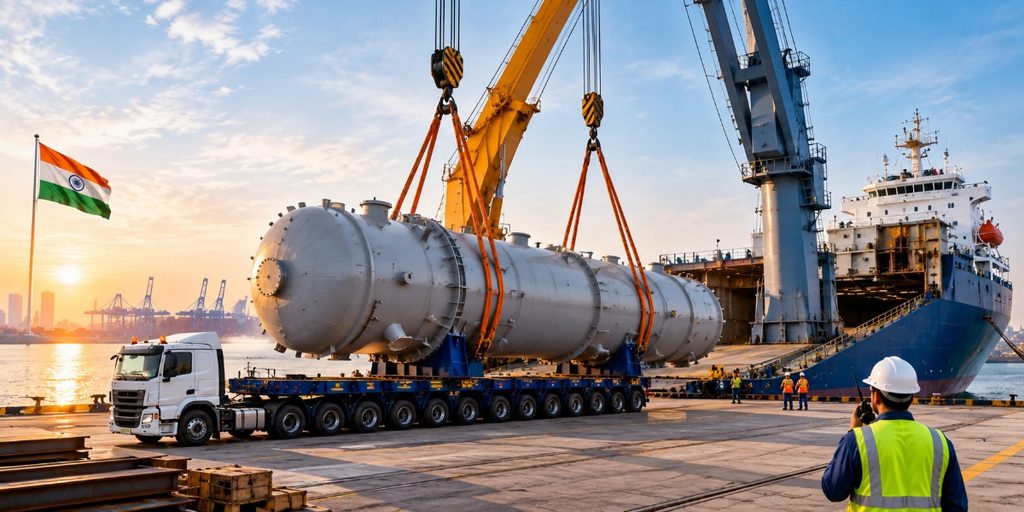
1. Selecting the Right Vessel for Heavy Lift Cargo
Vessel selection is one of the most important decisions in heavy lift shipping. The appropriate vessel depends on cargo weight, dimensions, lifting requirements, destination port capabilities and the overall project schedule.
Heavy-lift vessels
Heavy-lift vessels are designed to transport substantial or specialised cargo and may feature onboard cranes with high lifting capacities. They can be suitable when port cranes are unavailable or when cargo requires specialised loading arrangements.
Breakbulk vessels
Breakbulk vessels transport individual cargo pieces rather than relying entirely on standard shipping containers. They are often considered for large machinery, industrial structures, steel components and equipment that cannot be containerised efficiently.
Break Bulk Cargo and Breakbulk Shipping solutions must be evaluated against cargo dimensions, handling facilities, vessel schedules and discharge requirements.
Container vessels and specialised equipment
Some heavy or oversized cargo can move through container shipping using flat-rack or open-top equipment, provided the cargo dimensions, weight distribution and securing arrangements comply with carrier and equipment limitations.
Factors affecting vessel selection
Before confirming a vessel, logistics planners should evaluate:
- Cargo weight, dimensions and centre of gravity.
- Crane capacity and lifting configuration.
- Vessel stability and available deck strength.
- Port draft, berth suitability and handling facilities.
- Cargo securing requirements and weather exposure.
- Loading and discharge schedules.
A detailed assessment helps businesses choose an appropriate shipping method rather than relying on freight rates alone.
2. Crane Planning and Heavy Lift Operations
Crane planning determines how cargo will be lifted, transferred and positioned safely during loading and unloading. In heavy lift operations, a crane’s rated capacity alone does not establish whether a lift is safe.
The actual lifting capacity depends on factors such as operating radius, boom configuration, rigging arrangement, ground conditions and the approved lifting plan.
Essential crane-planning considerations
Cargo weight and centre of gravity: Accurate cargo data helps engineers determine the lifting configuration and appropriate lifting points.
Crane capacity: The crane must be suitable for the planned lift at the actual working radius and configuration.
Lifting accessories: Slings, shackles, spreader beams and lifting frames must have appropriate ratings and be compatible with the approved lifting arrangement.
Ground and berth conditions: Mobile crane operations require suitable ground-bearing capacity and outrigger support. Port-based operations also require assessment of the relevant working area.
Lift sequence: The sequence should account for cargo access, obstructions, vessel movement, clearances and the final positioning requirements.
Complex operations should be supported by competent lifting professionals, approved lift plans and appropriate supervision. Where necessary, marine surveyors and engineering specialists can help assess cargo condition, lifting arrangements and securing procedures.
CargoMate Logistics can help coordinate the project cargo planning and transportation requirements relevant to your shipment.
Need a Reliable Heavy Lift Logistics Partner?
Moving a transformer, turbine component, industrial press or other oversized equipment requires careful coordination between shipping, port handling and inland transport.
CargoMate Logistics helps businesses assess their project freight requirements and coordinate the logistics considerations involved in moving heavy and specialised cargo.
Contact CargoMate Logistics to discuss vessel options, heavy cargo handling and project transportation planning for your next industrial shipment.
3. Cargo Safety: Securing Heavy Equipment During Transit
Cargo safety begins before the cargo reaches the vessel. Incorrect weight information, unsuitable lifting points or inadequate securing arrangements can create serious operational risks.
A robust safety process considers the entire transportation chain, including lifting, loading, sea transit, discharge and onward delivery.
Important cargo safety measures
Pre-shipment inspection: Verify cargo dimensions, weight, condition, lifting points and any manufacturer handling instructions.
Lashing and securing: Use an engineered securing arrangement suitable for the cargo, transport mode and expected forces during transit.
Load distribution: Ensure cargo weight is distributed appropriately across the supporting structure and vessel loading arrangements.
Weather assessment: Consider wind, sea conditions and other environmental factors relevant to lifting and securing operations.
Documentation and supervision: Maintain relevant cargo drawings, lifting plans, inspection records and securing documentation.
For particularly valuable or sensitive equipment, additional condition surveys, protective packaging and monitoring arrangements may be appropriate.
These measures are especially important for Heavy Cargo Transport, where the consequences of inadequate planning can extend beyond cargo damage to operational delays and safety incidents.
4. Project Cargo and ODC Transportation in India
Heavy lift shipping often forms one part of a larger transportation operation. Once cargo arrives at an Indian port, it may need to travel to a factory, power plant, construction site or remote industrial facility.
This is where ODC Transportation and Over Dimensional Cargo planning become essential.
Oversized cargo may require specialised trailers, route surveys, bridge and road assessments, turning-radius checks, height-clearance verification and applicable permissions.
Oversized Cargo Transport should be planned according to the actual cargo dimensions, axle loads, road conditions and destination access. Transport arrangements may also require coordination with relevant authorities and infrastructure operators.
Depending on the shipment, Heavy Equipment Transportation and Machinery Transportation can involve multiple transport modes, including sea freight, road transport and rail where suitable.
For projects involving several cargo types, Multimodal Project Logistics helps coordinate the transition between transport modes and handling locations.
5. Industries That Depend on Heavy Lift Logistics
Power generation and renewable energy
Power plants require transportation of turbines, generators, transformers, boilers and other large components. Power Plant Equipment Transport must account for equipment dimensions, handling sensitivity and site delivery constraints.
Wind energy projects may involve long turbine blades, tower sections and nacelles. Windmill Transportation requires specialised route planning and suitable equipment for long or oversized loads.
Oil and gas projects
Refineries, offshore developments and energy infrastructure projects often involve pressure vessels, modules, compressors and specialised machinery. Oil & Gas Logistics must coordinate technical cargo requirements, handling procedures and project schedules.
Mining and industrial manufacturing
Mining operations may need crushers, excavators, processing equipment and other large machinery. Mining Equipment Transport requires careful assessment of cargo weight, route accessibility and destination unloading facilities.
For industrial construction and engineering projects, Industrial Project Logistics connects transportation planning with the wider project timeline.
6. From Freight Forwarding to Turnkey Project Logistics
Complex industrial shipments often involve several stakeholders, including manufacturers, shipping lines, vessel operators, port authorities, customs brokers, transport providers and site teams.
Project Freight Forwarding coordinates the freight movement and relevant shipping documentation. Depending on the scope, services may also include port handling coordination, customs support, inland transport planning and delivery scheduling.
For large engineering contracts, EPC Logistics Services can help align cargo movement with procurement, construction and installation milestones.
Businesses may also require an experienced Project Cargo Consultant to evaluate transportation options, identify logistical constraints and support planning before equipment is dispatched.
Turnkey Project Logistics may cover a broader end-to-end scope, from origin collection through international shipping and final delivery. The exact scope depends on the service agreement and project requirements.
CargoMate Logistics supports businesses seeking coordinated Project Logistics, Industrial Cargo Shipping and Project Cargo Handling solutions for demanding shipments.
7. How to Prepare for a Heavy Lift Shipment
Before requesting a quotation, businesses should prepare the following information:
- Cargo description, quantity and intended destination.
- Dimensions, gross weight and centre-of-gravity details, where available.
- Packing information, lifting points and technical drawings.
- Origin address, loading port and final delivery location.
- Required delivery date and project schedule.
- Available loading and unloading facilities.
- Any special handling, insurance or documentation requirements.
Providing accurate information at the beginning helps logistics providers assess vessel suitability, lifting requirements and inland transport options more effectively.
It also supports more realistic scheduling and reduces the likelihood of avoidable changes after transportation planning has begun.
Conclusion: Plan Your Heavy Lift Shipment with CargoMate Logistics
Heavy lift shipping in India requires careful coordination of vessel selection, crane planning, cargo securing, port operations and inland transportation. Every shipment has its own technical and logistical requirements, making early planning essential.
From Heavy Lift Cargo and Breakbulk Shipping to ODC Transportation, Multimodal Project Logistics and Project Cargo Services, the right logistics approach depends on the cargo, route, handling facilities and project schedule.
CargoMate Logistics helps businesses discuss and coordinate the logistics requirements associated with specialised industrial cargo movements.
Ready to move heavy machinery or oversized industrial equipment? Contact CargoMate Logistics to discuss your project cargo requirements and plan your next shipment with greater clarity.